

HHI Concours d'Élégance & Motoring Festival
50%+ age 55+, 60%+ local, 50%+ returning guests
$12.9M in direct visitor spending annually
Strategic design roadmap & tested prototypes
Client
Audience
Impact
Deliverable
The Challenge
A beloved event that younger audiences weren't showing up for, and didn't feel invited to.
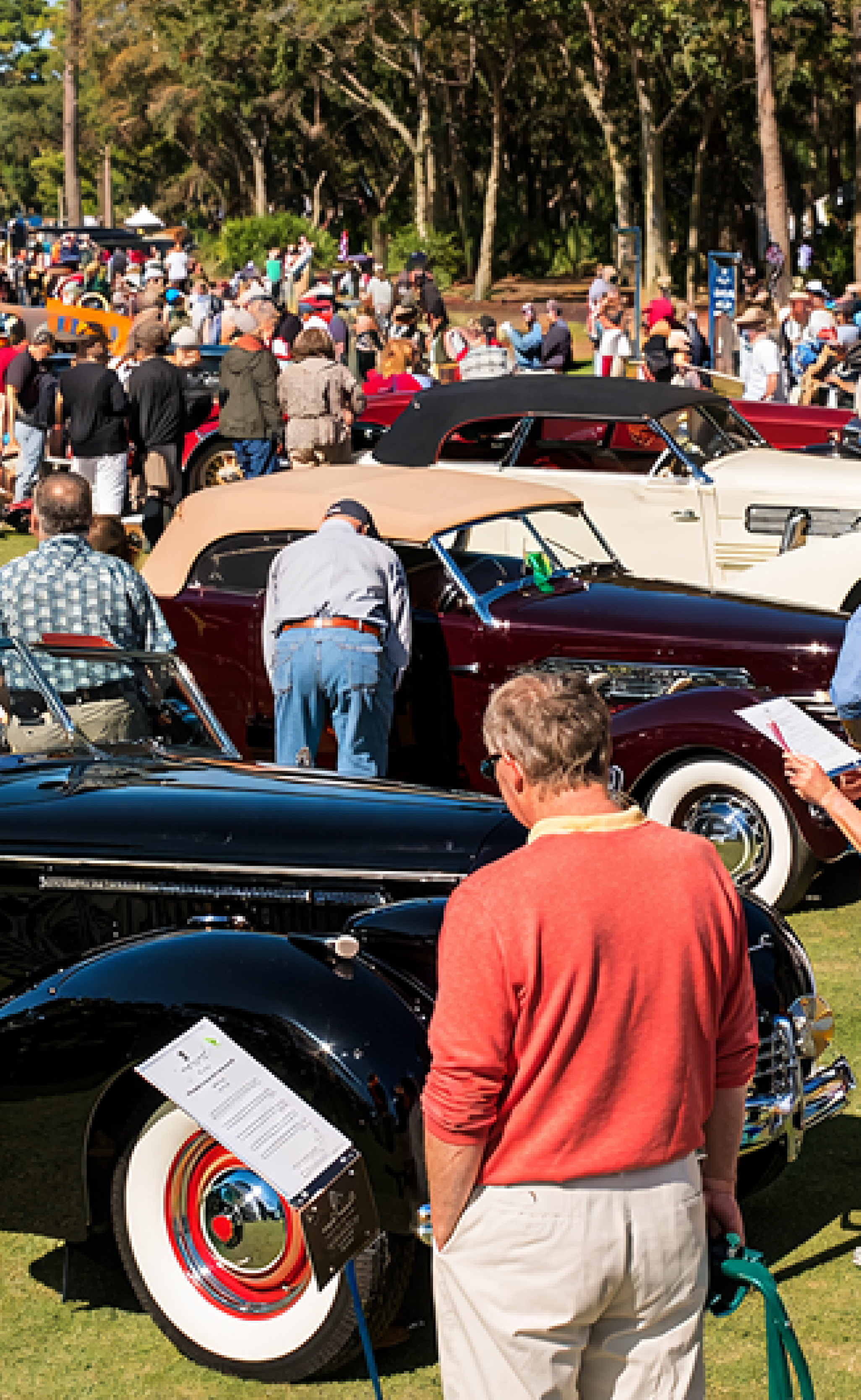
The Hilton Head Island Concours d'Élégance is one of the Southeast's most prestigious automotive festivals. Over 50% of its attendees are 55+, most live within 50 miles, and many have been coming for decades. That loyalty is the event's greatest asset and its biggest risk.
Younger visitors were attending but not returning. Volunteers were showing up underprepared. The event's charitable mission — $12.9M in annual regional impact — was nearly invisible on the show field. The Concours needed a way to evolve without alienating the community that built it. That's what our team was brought in to design.
What I did
Prioritization Workshop
I co-facilitated the stakeholder workshop where we ranked 20+ opportunities against impact and feasibility. This session is what narrowed our focus to four areas — without it, we would have tried to solve everything and solved nothing.
Whitepaper Design
I designed the whitepaper end-to-end, visual design, layout, typography, and information hierarchy. I translated 10 weeks of dense research into a publication that felt cohesive and polished, so that non-design stakeholders could pick up and navigate on their own.
Journey Mapping
I built the Gen Z journey map tracking discovery through post-event reflection. The gap between intent and action — "I wanted to come back, but I didn't know when" — pointed directly at the social media and planning gaps we later addressed.
Connecting the Dots
With 10+ interventions across four opportunity areas, the work risked feeling like a feature list. I reframed the concepts through one narrative arc, Heritage in Motion, and three strategic lenses to create a coherent design vision that stakeholders could actually rally around.
What we found
A set of tensions at the heart of the Concours experience.


Experience Structure & Engagement Drop
Lorem ipsum dolor sit amet, consectetur adipiscing elit, sed do eiusmod tempor incididunt ut labore.
Barrier to Entry & First Impressions
Lorem ipsum dolor sit amet, consectetur adipiscing elit, sed do eiusmod tempor incididunt ut labore.
Misalignment with Younger Audiences
Lorem ipsum dolor sit amet, consectetur adipiscing elit, sed do eiusmod tempor incididunt ut labore.
Tension Between Tradition & Evolution
Lorem ipsum dolor sit amet, consectetur adipiscing elit, sed do eiusmod tempor incididunt ut labore.
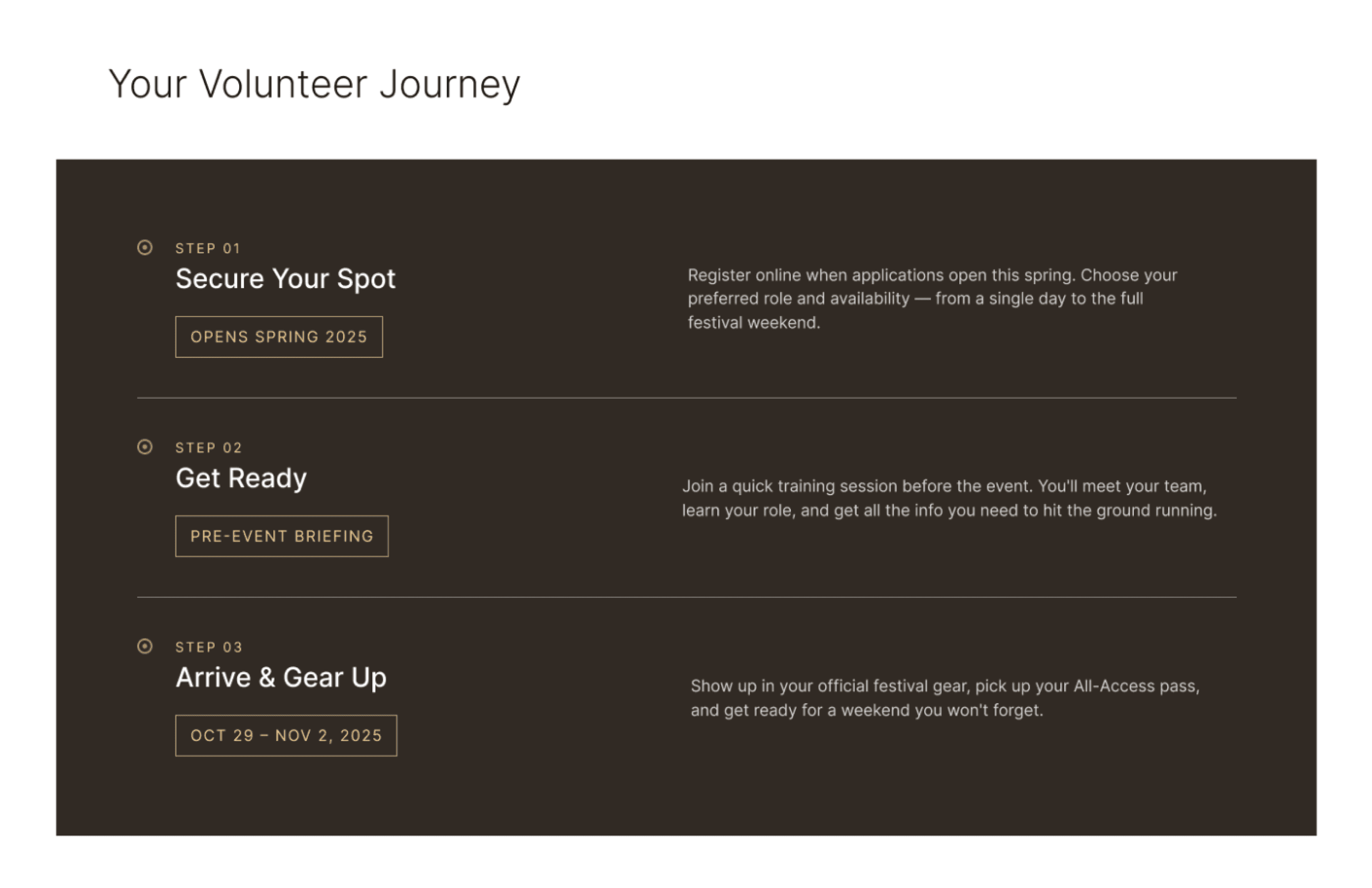
Volunteer portal redesign & kickoff day
Post-event appreciation packages
Behind-the-scenes storytelling content
The "traffic cone with a smile" quote from a volunteer interview became the brief for this entire lens. The volunteer portal and kickoff day concepts came directly from mapping what volunteers felt they were missing: belonging, not just briefing.
Building Lasting Engagement
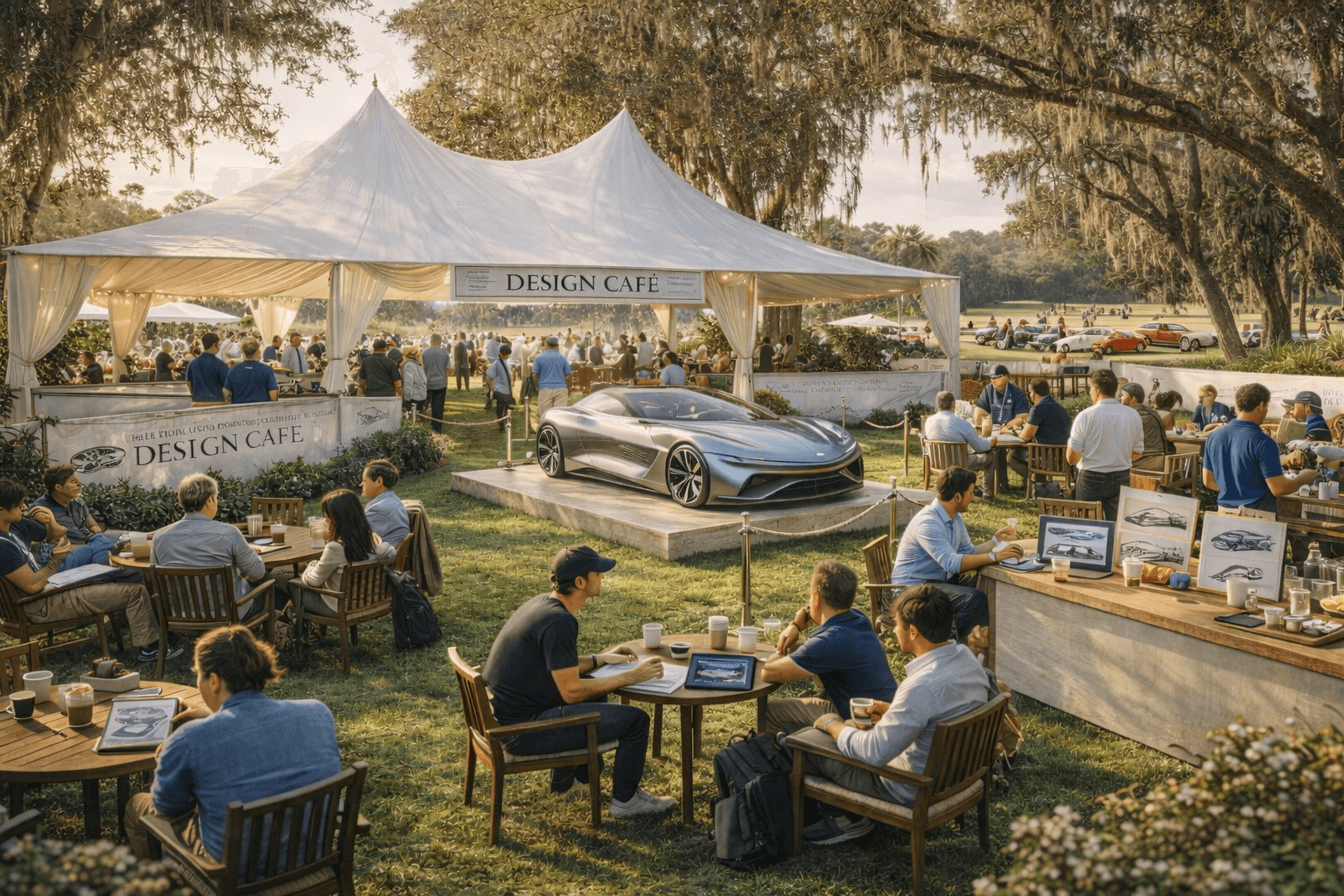
Design Café — design conversations over coffee
Car Restoration Workshop
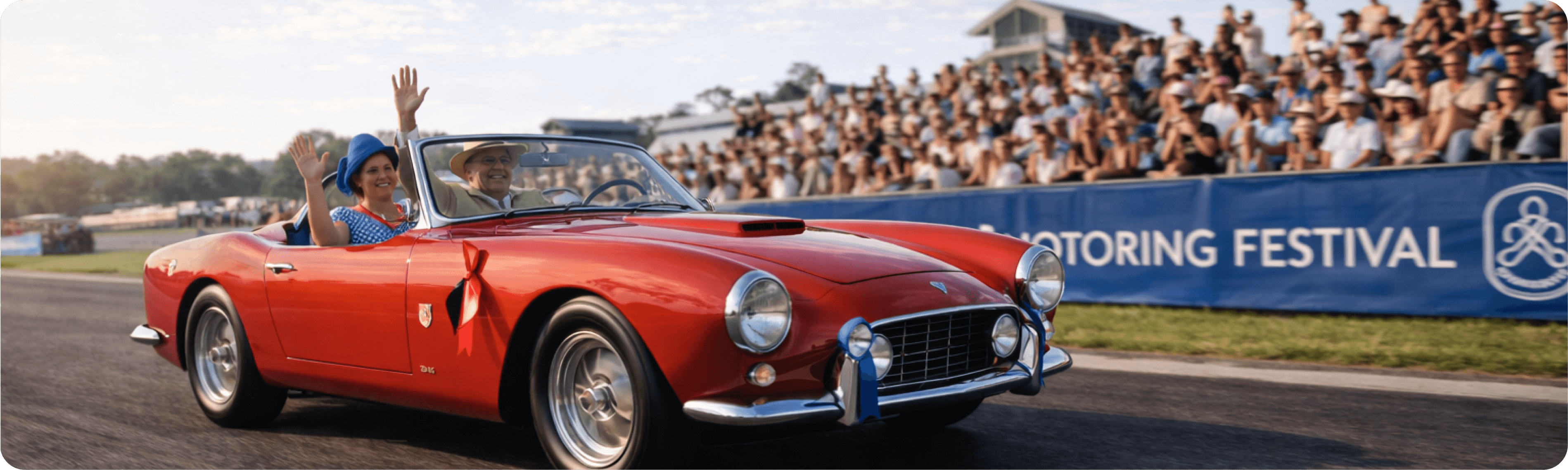
Reimagined, story-led car parade
The "seen it all" finding told us the event needed depth, not breadth. I contributed to the Design Café concept after an interview with a young guest who said he wanted to "talk to someone who actually knows these cars", not just look at them behind a rope.
Putting Heritage First
Our Design Response
Redesigned website & trip planning hub
Onboarding-focused confirmation email
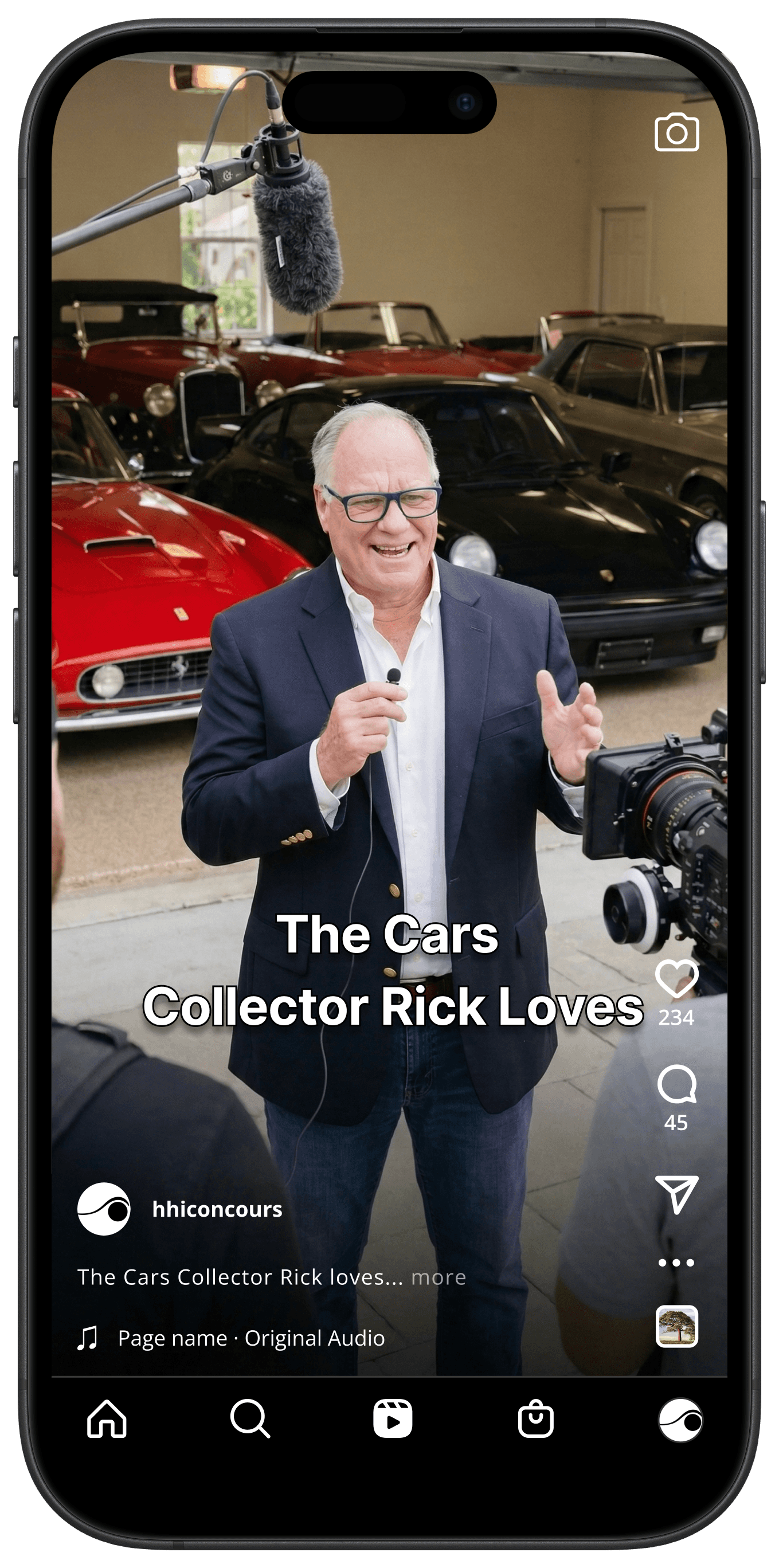
Storytelling & Educational social carousels & reels
Opening Up the Concours
The research showed the barrier wasn't interest — it was clarity.
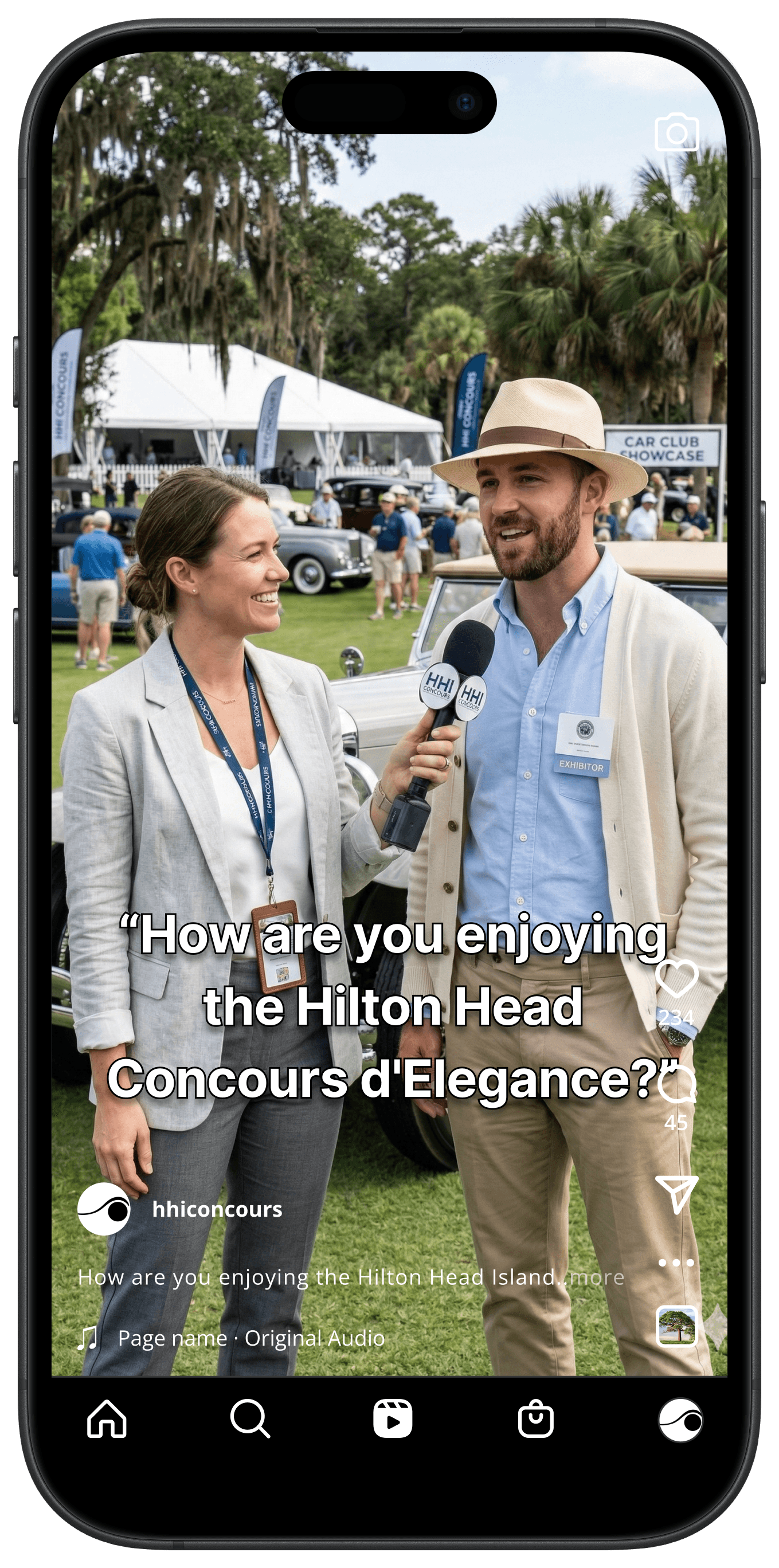
First-timers didn't understand what a Concours was, couldn't find parking information, and had no way to plan. I led the social media and ticketing concepts because I'd observed that friction firsthand.

The Outcome
EASIER TO ENTER
The Outcome
RICHER TO EXPERIENCE
The Outcome
MORE RETURNS
The Mental Model
The Ecosystem Map
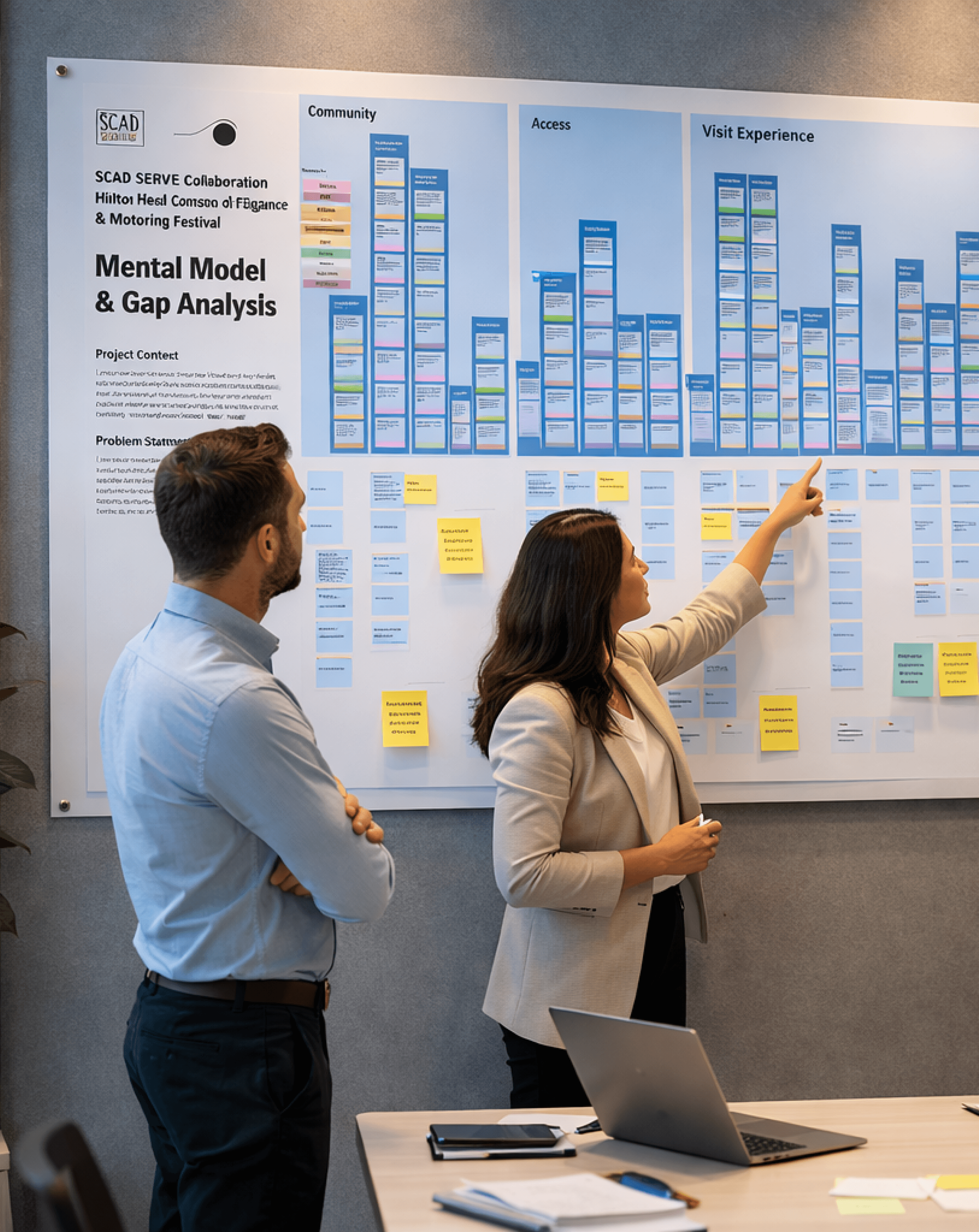
A Mental Model is a deeply ingrained representation of how something works in the real world, shaped by an individual's past experiences, intuitive perceptions, and personal values. In the context of design research, it moves beyond what users do to uncover why they do it, mapping the internal logic they use to interact with a service or environment. By documenting these cognitive frameworks, designers can identify the "gap" between how a system is currently structured and how a user naturally expects it to function, ensuring the final solution feels intuitive rather than forced.
For this project, we used Mental Models to synthesize our primary research from guest interviews and on-site observations at the Hilton Head Island Concours d’Elegance. We categorized our findings into seven cognitive towers—Community, Access, Visit Experience, Modern and Heritage, Culture, Recognition, and Business Philosophy—which allowed us to see the event through the eyes of both legacy attendees and emerging younger audiences. This methodology was instrumental in moving our focus away from surface-level logistics and toward emotional drivers, helping us design touchpoints that resonate with the fundamental beliefs and expectations of our participants.
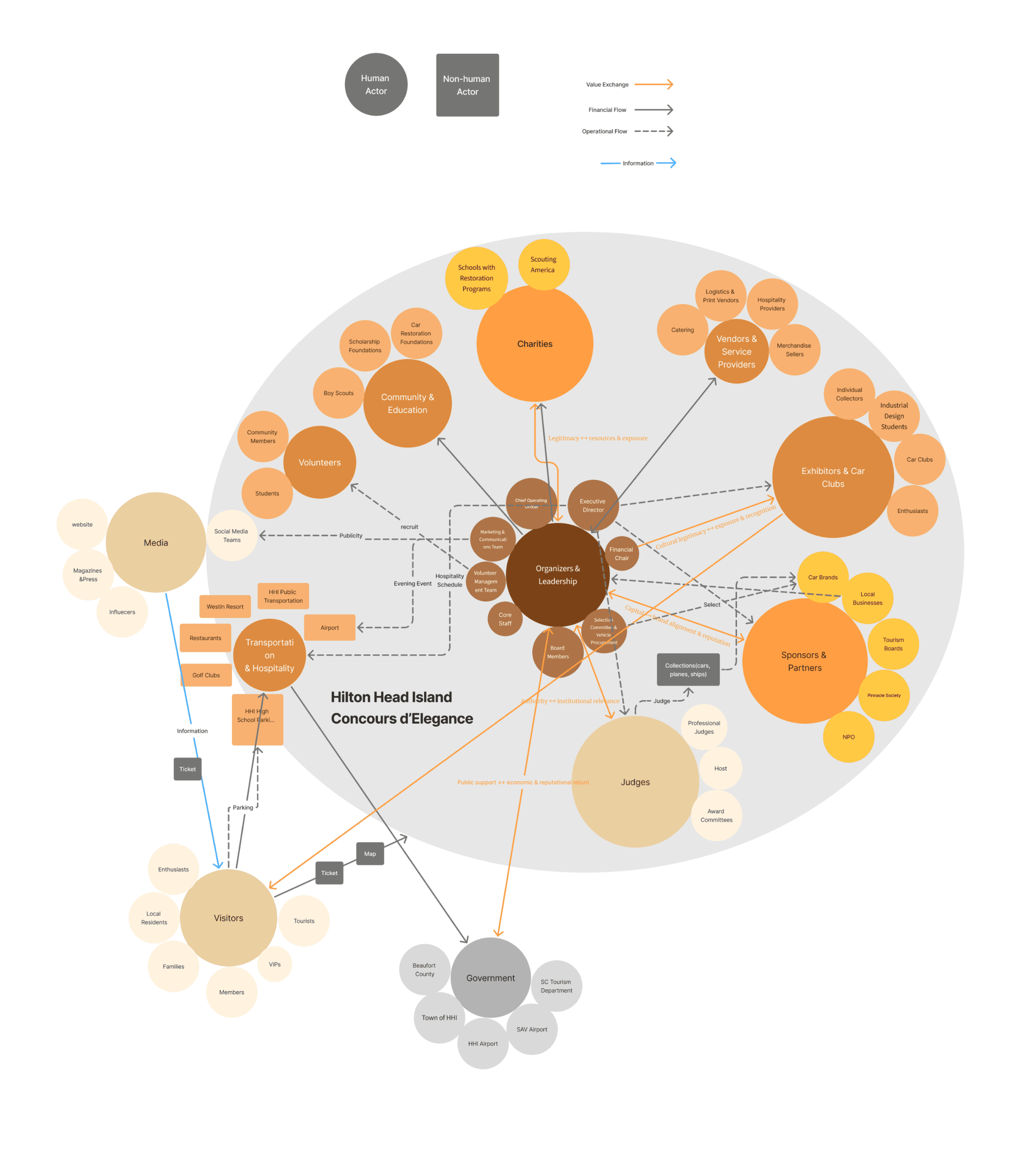
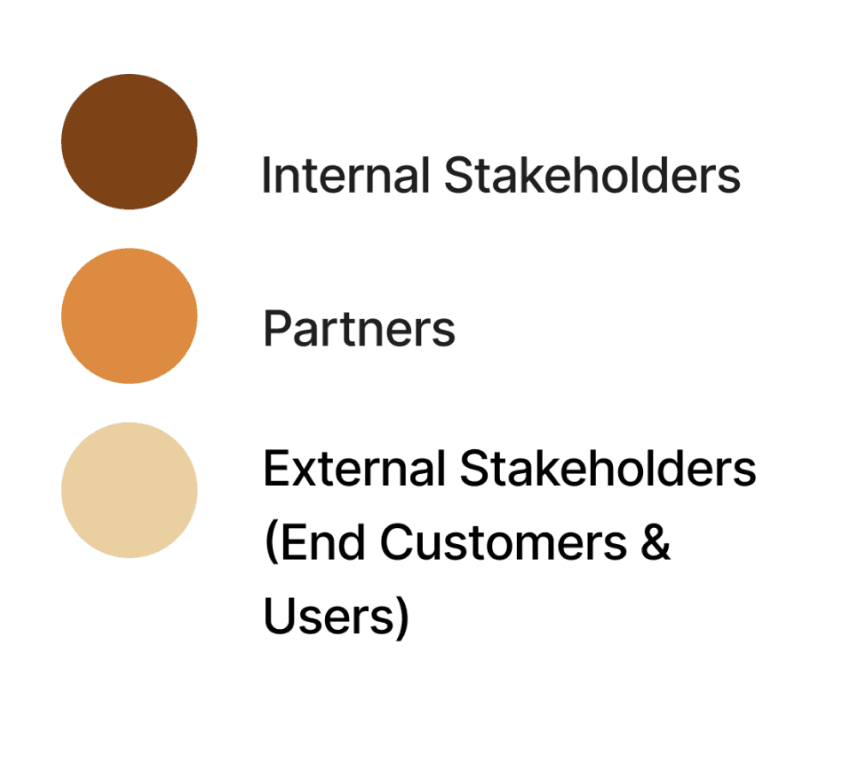
The ecosystem map illustrates all the stakeholders required to make the Concours possible, from organizers, volunteers, judges, and exhibitors to sponsors, local government, tourism partners, schools, and community organizations. By placing these groups around the event, we could see how decisions in one area—such as programming or parking—ripple through others.
“It also reveals where relationships and information are strongest and where they are fragile or informal. This view helped us design solutions that respect existing partnerships, clarify roles for volunteers and staff, and create new opportunities for sponsors and educational partners without adding unnecessary operational strain.
The Visitor System Map
The Vounteer System Map
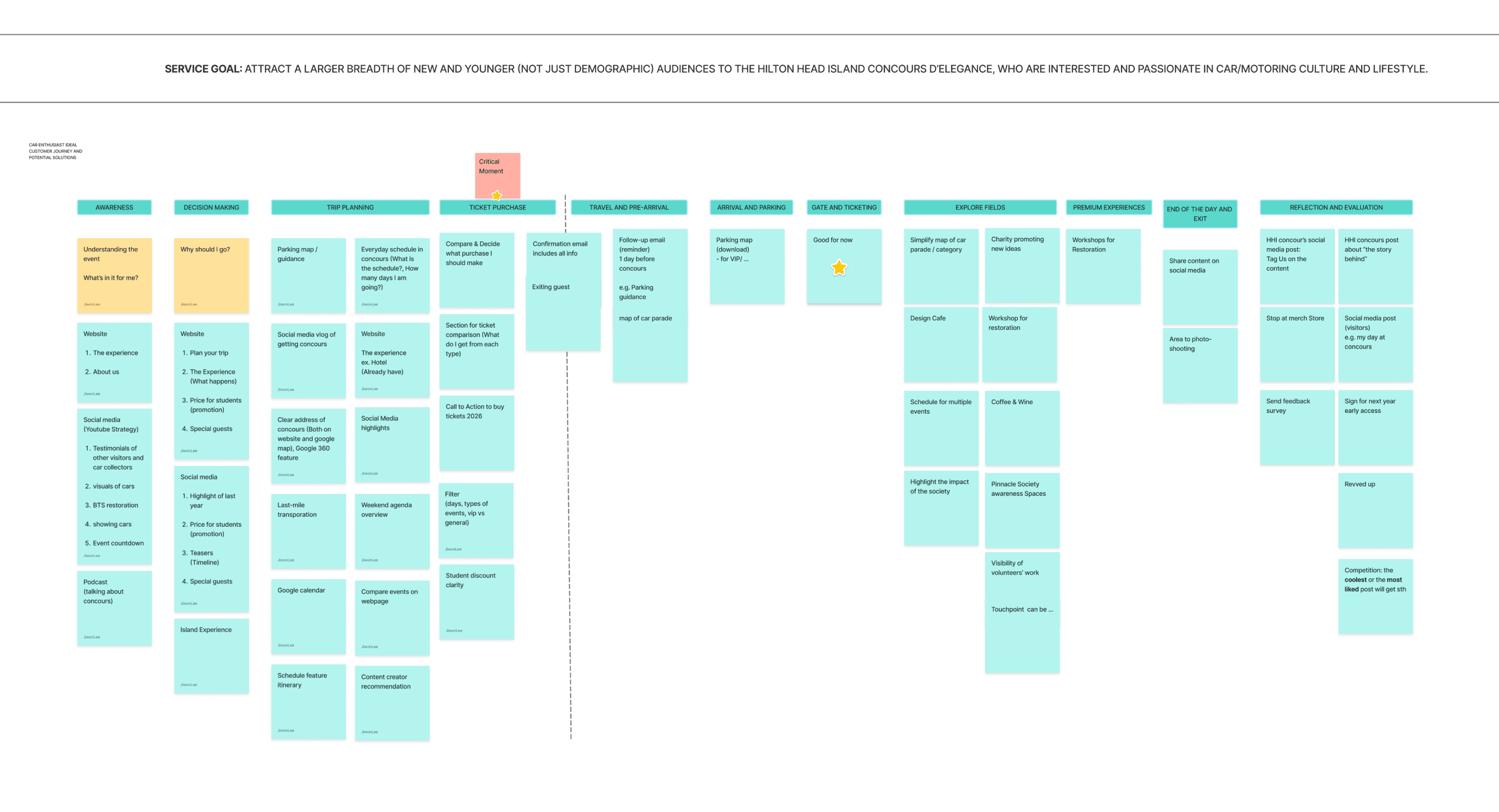
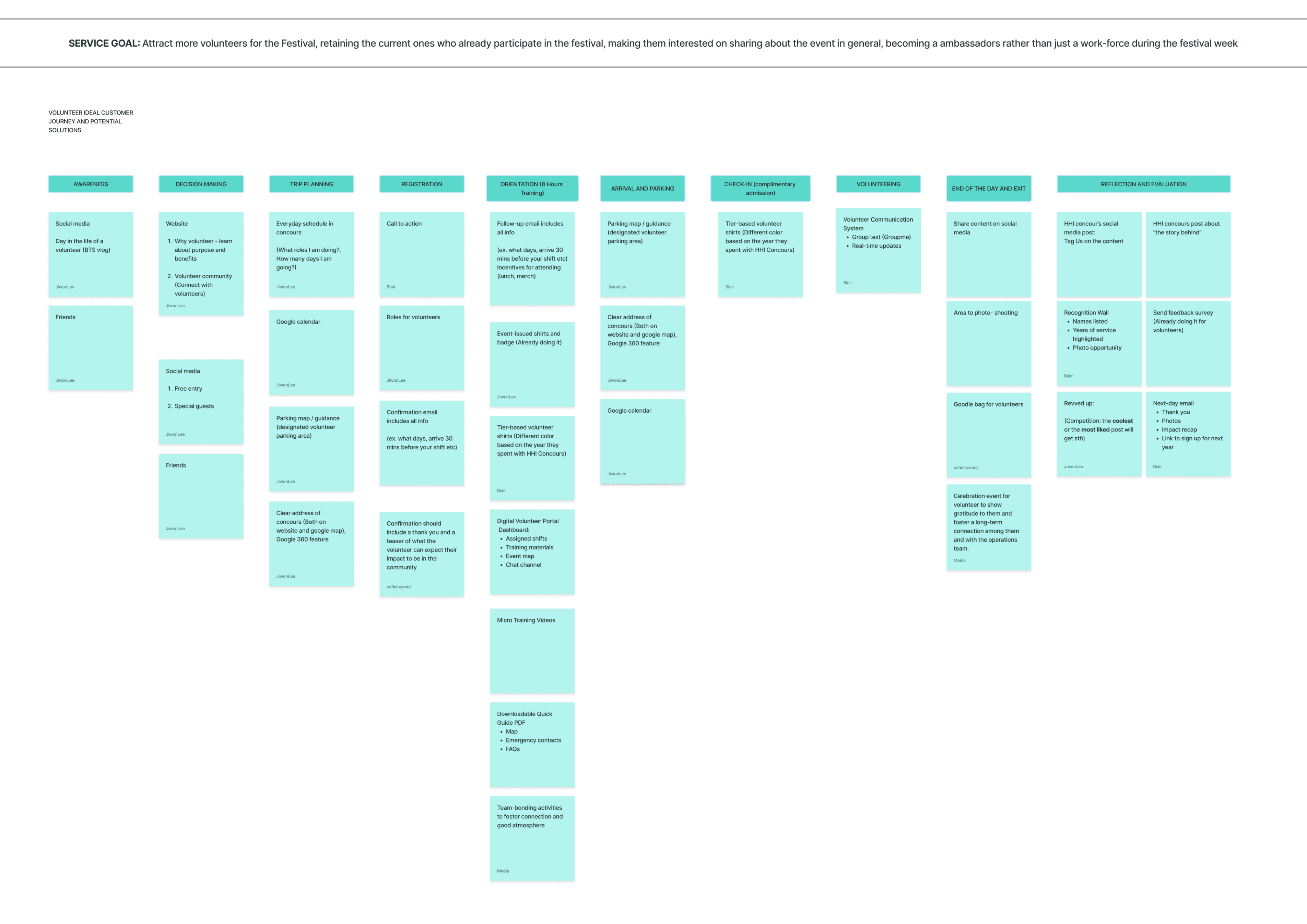
The visitor system map breaks down the services, channels, and backstage processes that support a typical guest before, during, and after the Concours. It links visible touchpoints and tools that make them work. By mapping these connections, we identified where gaps in information or coordination create friction for guests, especially in early‑stage planning and first impressions on arrival.
The volunteer service map traces the experience of community members and students who support the Concours, from initial recruitment and sign‑up to shifts across the weekend, and post‑event follow‑up. This map helped us see where volunteers currently lack information, recognition, or community, and how that undermines both their own satisfaction and the guest experience. It also informed our concepts for volunteer‑specific touchpoints, including a redesigned sign‑up page, a ‘take your kit’ bonding day, and a more intentional thank‑you program.
Reflections
What I’ve learned
This project deepened my understanding of service design as a tool for institutional change — not just for startups or digital products, but for legacy organizations with deep cultural roots and complex stakeholder ecosystems. Designing for the Concours meant holding two tensions simultaneously: respecting what already works and imagining what could be.
Working within a SCAD SERVE framework also reinforced the value of genuine community partnership. Our most useful insights didn't come from desk research — they came from being on the ground, watching how real people moved through a real event, and listening carefully to the volunteers, organizers, and guests who keep the Concours alive year after year.

9
Let’s Connect
Home
About
Resume
Projects