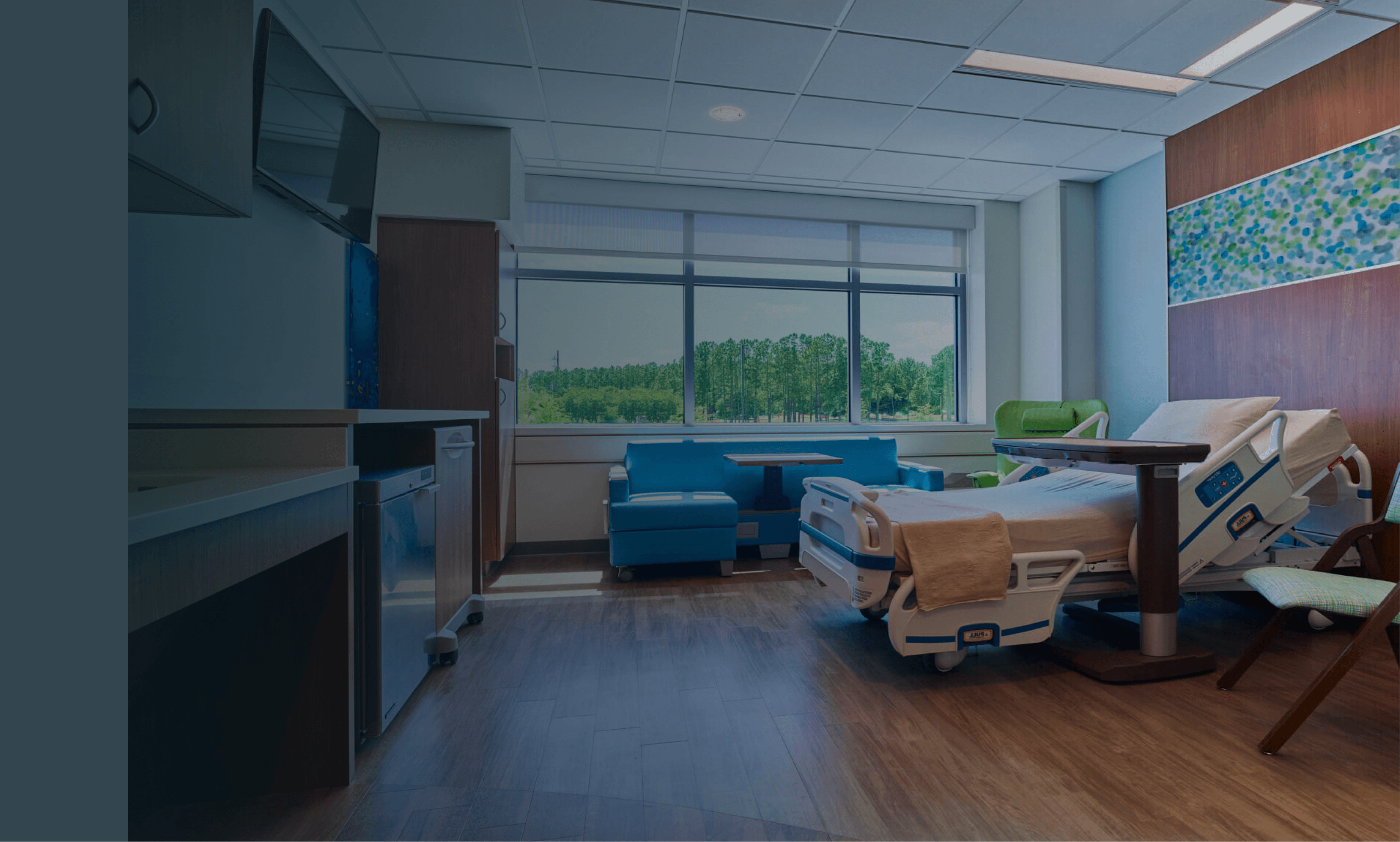
Operational Efficiency
UX Research
2025
Year
10 weeks
Duration
Service Designer
My Role
Healthcare Systems
Human-Centered Design


In partnership with AdventHealth, our interdisciplinary SCADpro team spent 10 weeks envisioning a future where technology helps hospital staff find people, equipment, and information faster — so they can focus entirely on patients.

The Challenge
Hospitals are complex environments where seconds matter.
Patients, families, and staff navigate sprawling facilities under pressure — searching for rooms, equipment, colleagues, and information in moments where clarity is everything. Despite the sophistication of modern medical technology, the human experience of moving through a hospital often feels fragmented, disorienting, and stressful.
AdventHealth brought us in to imagine something different: a future where the hospital itself becomes a smarter, more connected environment — one that anticipates needs, reduces friction, and lets care teams do what they came to do.

"How might we envision the future of smart hospitals where technology enables patients, visitors, and team members to find each other and everything?"
Design Brief




Fragmented communication
Care coordination across departments relies on systems that don't always talk to each other — creating gaps at critical handoff moments.
Locating equipment and resources
Staff spend significant time searching for mobile equipment, slowing workflows and pulling attention away from patient care.
The emotional weight of hospital time
Beyond logistics, being in a hospital is inherently stressful. Design that reduces uncertainty can meaningfully ease that burden.
Navigation in high-stress moments
Patients and families struggle to find their way through large, unfamiliar facilities, especially during emotionally difficult visits.

What I did
UX & Service Designer
Mapped journeys for both patients and staff, and helped define how HeartBeat's touchpoints work together as a connected system, not isolated screens.
Researcher
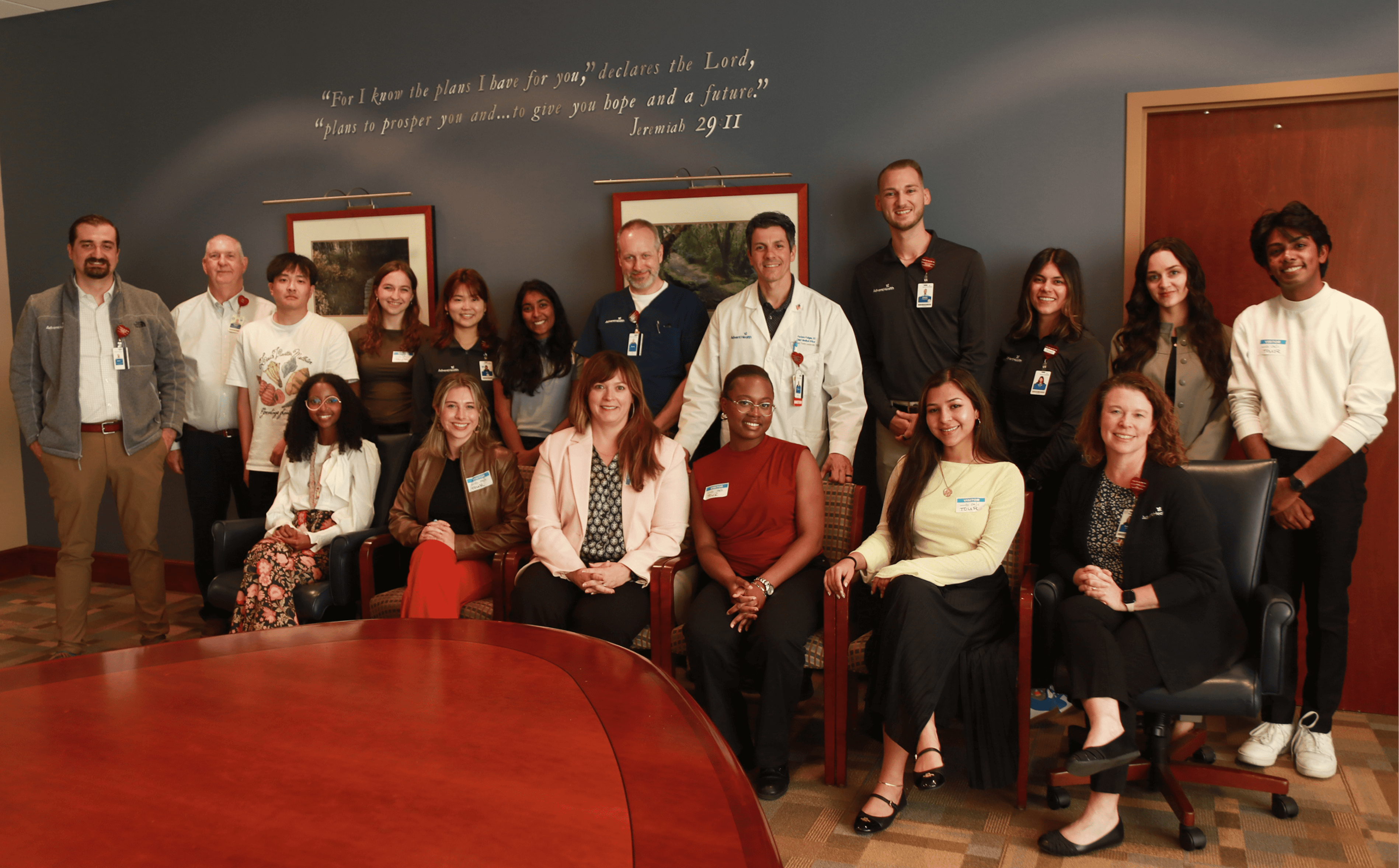
Contributed to surveys, interviews, cultural probes, and a field visit to AdventHealth facilities, observing real workflows and navigation pain points firsthand.
Interface & Storytelling Designer
Co-designed key interface moments and helped craft the visual narrative presented to AdventHealth leadership at the end of the engagement.
Three focus across research, service design, and storytelling.
Our Approach
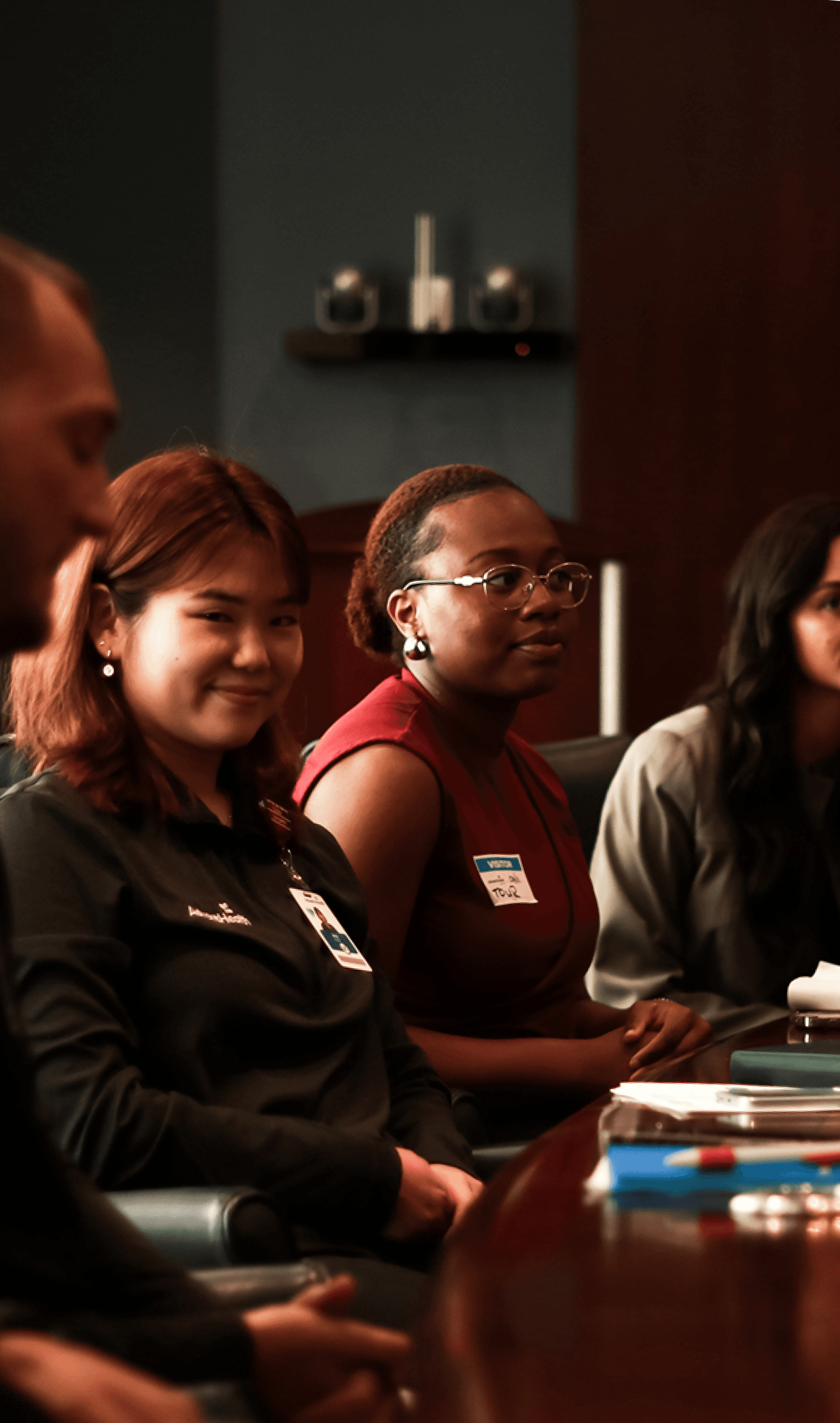
Mixed-method research grounded in real hospital experiences.
Surveys | 100+ responses
Quantitative data helped us identify patterns in navigation difficulty, communication friction, and workflow disruption at scale.
In-Depth Interviews | 14+ sessions
Conversations with nurses, administrators, patients, and families surfaced the nuanced emotional and operational realities that quantitative data alone couldn't capture.
Cultural Probes | Self-Reported Images
Image-based probes invited participants to document their own hospital experiences — capturing moments of confusion, clarity, and emotional response.
Field Trip | On-site observation
Visiting an AdventHealth facility let us observe workflows, wayfinding challenges, and logistics in real time, grounding our design directions in reality.
The Final Concept
Smart Heart
Connected Touchpoints
HeartBeat
HeartBeat is a connected care ecosystem — not a single screen or feature, but a family of touchpoints designed to work together across the hospital environment.
The design centers on a simple principle: when people spend less time searching and guessing, they spend more time caring. HeartBeat puts the right information in the right hands at the right moment — quietly, reliably, and with awareness of the human weight of hospital environments.
This project is protected under NDA.
Specific interfaces, system flows, and design artifacts are omitted from this public portfolio. Full details are available to be shared privately upon request in appropriate professional contexts.
A staff badge concept designed for real-time, privacy-conscious awareness, surfacing meaningful signals that help care teams stay coordinated without adding cognitive load.
A family of staff and patient-facing interfaces, each serving a distinct role in locating people, equipment, and information across the hospital.
Reflections
What I’ve learned
This project reminded me that the most meaningful design interventions are not always the most visible. Entering an unfamiliar healthcare system pushed me to rely on curiosity, listening, and careful observation. As I learned from doctors, nurses, staff, and patients, I began to see how much care depends on the systems working quietly in the background.
I left with a deeper respect for the people who make care possible, and a stronger belief that design can reduce friction, create clarity, and make more space for human connection.
9

Let’s Connect
Home
About
Resume
Projects